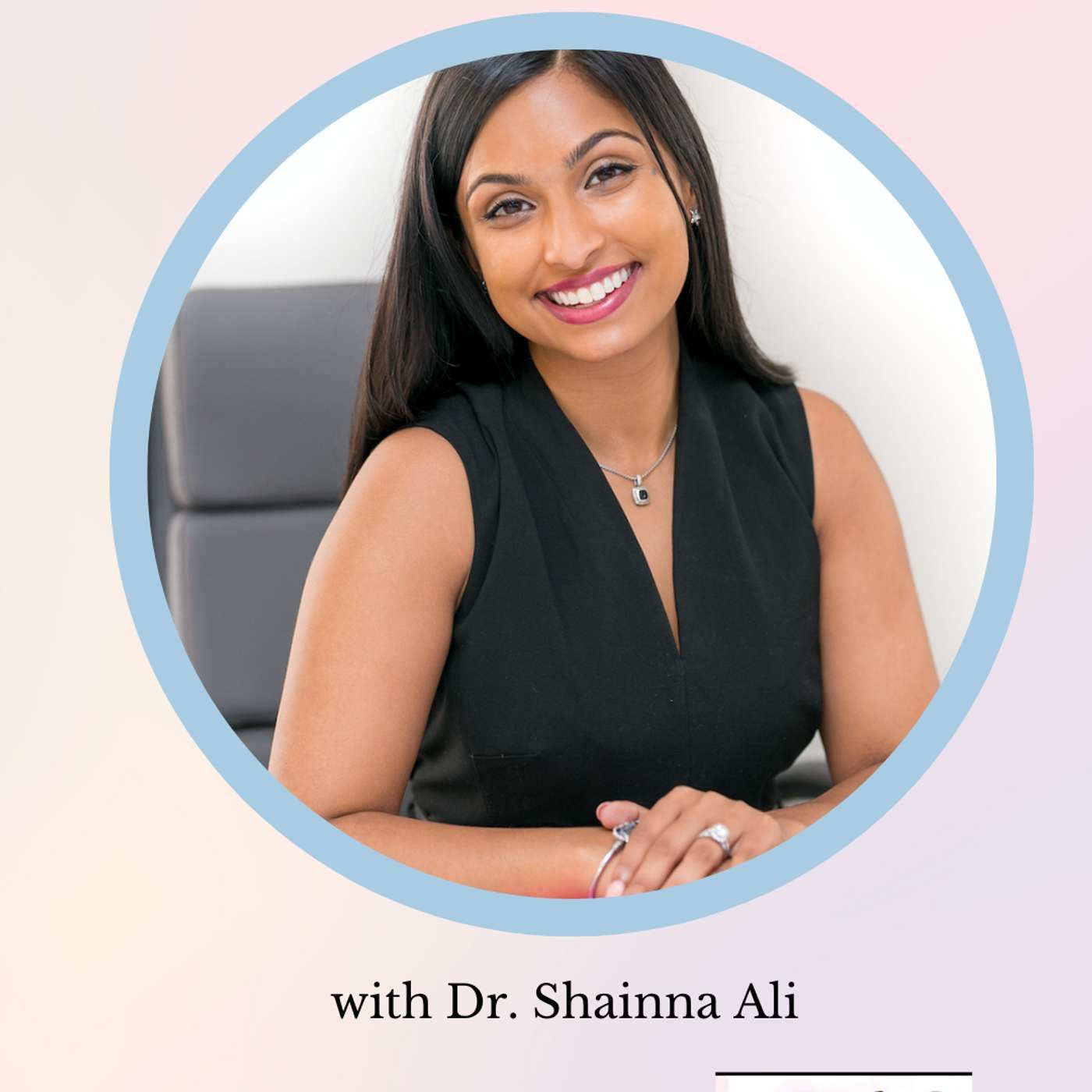
Generational Healing: Breaking Family Patterns & Rewriting What Our Kids Inherit with Dr. Shainna Ali


 RSS Feed
Dr. Shainna Ali: mental health counselor, educator, advocate, and bestselling author of The Self-Love Workbook — joins Samantha to talk about her newest book, Generational Healing: Shifting Patterns, Creating Change.In this conversation, Dr. Shainna shares the real clinical definition of self-love ("the practice of accepting, caring for, and intending to yourself"), why parenthood reawakens generational patterns and why that isn't backsliding, her own story of living with undiagnosed childhood anxiety, and the rushing pattern she traced back through her Guyanese heritage — and how she now answers it with "I am safe now."They also get into the practical stuff: what to do when you have zero bandwidth (surviving is the healing), why boundaries are gates with key codes rather than walls, why the book never asks anyone to forgive or reconcile, what it means that you are already an ancestor, how to reparent yourself while actively parenting your kids, and how to tell mom burnout apart from just being tired. She closes with the book's final line — "the radiance was always within you" — and one thing to do differently at the dinner table tonight.Links mentioned in this episode:
- Dr. Shainna Ali's website: https://drshainna.com/
- Pre-order Generational Healing: Shifting Patterns, Creating Change on Amazon: https://www.amazon.com/dp/1646048989/ref=as_li_ss_tl
- The Mental Wellness Practice Podcast: https://drshainna.com/thementalwellnesspracticepodcast
- Follow Dr. Shainna on Instagram: @drshainna
0:03 Because there's mostly moms listening here that's just a given truth if you have a child you are already an ancestor. Welcome back to the Running Wine Mom podcast. I'm your host, Samantha Selinsky, aka the Running Wine Mom. Today's guest is someone I've been so excited to talk to. Dr. Shaina Ali is a mental health counselor, educator, and advocate that literally wrote the book on self-love. Actually, she's written six of them, including Self-Love Workbook with over 100,000 copies sold. Her newest book, Generational Healing, Shifting Patterns, Creating Change, is all about the patterns we inherit from our families and and the ones we get to rewrite for our own kids.
0:46 She's been featured in Vogue, ABC News, NBC, The Washington Post, and today she's on my podcast. So, Dr. Shana, welcome to the show. Thank you so much for having me. I'm excited to chat. Yes. And so can you tell everyone about yourself and what you are doing to change the world? Well, Samantha, I think you actually did a really great job at telling everybody about myself. So I'm not going to be super redundant there, but I will add some things that weren't in the intro. So that are all really important in terms of who I am. I also identify as a daughter, a wife, a sister, a mother, and a friend. So I see myself very relationally. I'm really grateful to do the work that I do, especially because self-love and doing the work within self-love and mental health holds me really accountable. But I do see two sides. Self-love, the counterpart, is also generational healing. So I am who I am because of the people I'm connected to.
1:40 I love that. And I find, especially becoming a parent, finding those generational healing, you know, experiences is very eyeopening. Like before I had kids, I thought like I did the work on myself. I'm good. And then having kids, I'm like, okay, this is a little different. Absolutely. And I think parenthood brings that back up. So even if it was something that you did well, perhaps noticed a pattern and he said, okay, caught it. I feel empowered to shift it. Just the weight and the gravity of tending to a human being, especially when they're a little human being, that just kind of adds to the nature of the intensity. So just to normalize that, that for a lot of people, they can feel like they're backsliding in their healing journey because they're like, didn't they already tend to this? I already did this. I But especially when those patterns are generational and go further back than we can probably even trace them. No wonder they pull us there.
2:43 And so something I found very interesting because I kind of found it in myself as well. You live with generalized anxiety as a kid without really knowing what it was. And counseling in college kind of changed that perspective. So what was the moment that you realized like, oh, my gosh, there's nothing wrong with me. I'm just anxious. Yeah, I'm glad that you relate, and I'm sorry you relate at the same time, because having that reckoning is really healing, yet also having to live all those years without that tending, it can be really sad. So first I'll share is that this seems like two parts to me. I definitely did not know that I was living with anxiety growing up. That is a hindsight 2020. As you noted, but at first it was just, oh, I have anxiety.
3:30 I didn't think like, oh, it's just anxiety or it's not a problem. I realized, oh, I'm living with something that I need help because by that juncture, I had not known a lot about psychology and the wider realm. And I had some really stigmatized, stereotypical beliefs about what it means to need therapy or counseling. So it did not even occur to me. So that was the first phase. And in pursuing help for anxiety, I learned a lot. I mean, obviously, my emotional intelligence shifted. But again, seeing the connection to the world around me. my loved ones, my community, my culture, and just kind of cross-culturally worldwide noticing, wow, we don't tend to our emotions the way that we could and could benefit from. So realize that anxiety is a natural, normal emotion. And if we tend to it proactively...
4:26 could actually be a superpower. That didn't happen until much later. But as soon as it did, it kind of skyrocketed my interest in the mental health field, becoming an educator, the books, the podcast, everything just kind of fireworked out from there. Yeah, it's so interesting once you find that kind of solution to what you've been dealing with, how you want to help everybody to find that solution quicker than you did, which is great that you're helping people do that. And so I want to talk about self-love because I feel like it gets thrown around so much. It almost sounds like it's like a bubble bath, you know, self-love, self-love. Yeah. But as a clinician, what is the unsexy definition of it?
5:09 Well, I just want to highlight it can be sexy and it can be the bubble bath, but that's just nuances within it. And I appreciate that you even preface it with as a clinician, because that was the whole thing that got me to frustration of. How do we define self-love? People throw it out as you should do this thing. And then in my clinical path, it was you should not only do it, you should help people cultivate it. And there was no definition. So I see self-love as the practice of accepting, caring for, and intending to yourself. And that can shift across time. And so the self-love workbook has sold over 100,000 copies. So you literally wrote the book on it.
5:49 But what is one exercise in that workbook that people resist the most and then later are thanking you for doing it, for having them do it? I love this question because I don't have a clear answer. Self-love is so subjective that someone will be like, this activity, page 44, I can't believe it. This, I thought it was easy. And it just took me by surprise. I can't even complete it by myself because think about it. For me, I use this workbook a lot in my clinical practice, right? So folks are getting to work on it by themselves and then bringing it in to me. I've heard this with a variety of different activities. And I do think that normalizes how subjective it is. What I will share is that thread though, is that folks will look at the workbook and maybe you experienced this yourself, Samantha, you'll skim through it and it's like, okay, workbook. I'm familiar learning through workbook. That's what a lot of us did in grade school. Like this is easy. So I'm ready to self-love and I'm just going to do this easy peasy. And people talk about how taken aback they are by seemingly simple questions. Just three lines, you can, you know, kind of just booms and feels nebulous from there.
7:04 So what I do here is not so much which activity, but just the activities at large within the wider practice of self-love seem simple and they are way more multilayered. And that's one of the things that I do with my students is that I will have them write the top five things that they love the most. Like, what are your top five most loved things? And afterwards, I always ask, how many of you guys wrote yourself in that? And not many of them raise their hand, but I always kind of go into those kinds of things just saying like, you should be on that list and you should be loving yourself. You love all these other things, but put that energy into yourself, I think is something a lot of people don't think about.
7:50 Beautiful. Yeah, I've done something similar in some of our presentations and it just speaks to how we're not really encouraged to to put ourselves at the top of mind. So a lot of people get to the juncture that they think, okay, I probably do need to cultivate self-love and they can feel really ashamed in how hard it is. So normalizing like we were not encouraged and if you're anything like me, you may have been discouraged because of the misconceptions that self-love is selfish or narcissistic or sinful or whatever it is. I actually was discouraged from self-love because I didn't know the truth of what it was. And now that I know it, I know I can't undo it. I can't not need it like we all do.
8:33 Mm-hmm. And you say that self-love and generational healing are two sides of the same journey. Can you break that down for maybe the mom who's listening at pickup or what does that look like on a regular day? Yeah, absolutely. And the mom at pickup is so relatable to me. I'm always listening to a good podcast on pickup and drop off. So thanks for listening in if that is your experience right now. So the reason why I say it's two sides to the same coin is because to me, these two practices are have always interrelated. The reason why as of late, I branched out into naming more of the generational healing is that I was realizing that not a lot of people were putting that in their self-love because in focusing on the self, especially in our hyper individualistic modern times, especially in the West, we then see it as self, right? So self, solitary, solo, independent.
9:30 So your love of yourself is based on if you're willing to do it. Now, if any, especially a mom, is trying to practice self-love, we know that true self-love for ourselves is cultivated by the helping hands of others. The other mom who's willing to tag team at the playdate so you can at least have another human interaction with Perhaps your partner just parenting alongside you so you don't have to carry as much of the mental load and you can have time to truly focus on the self without any of that additional guilt, right? The community and the village, when I say self-love matters, I'm not saying that everyone around you doesn't matter. And especially for moms, I'm actually quite saying the opposite. I am saying, please fill up that tank because you're going to need it for other people, your children, your part, village at large.
10:26 So I've always seen it in that way. But I also, in working with clients who have pretty big obstacles to self-love, like those misconceptions I was giving examples of earlier, when we're looking at it, and many times folks feel like they're hitting into a wall of, I know that I need to cultivate self-love. I work with the definition and I just feel like I can't break through it. A lot of times that's a generational pattern that they inherited. But it's not just that they believe it's fish. For years past, self-love would have meant like a safety issue, right? It would have been dangerous and it actually would have been harmful in some ways. especially the self-love of today, what they have the privilege and access of. Not to mention not just the past, but also into the future.
11:16 Many moms I sit with, they realize, man, I did not learn how to love myself because my parents, especially, put herself on the back burner all the time. So if anything, I learned how to not. But I look into the eyes of my child and the idea of them feeling guilty for resting or taking a break or Having fun when there's something serious to be done is heartbreaking for lots of parents. So realizing that you sit at that intersection, that your self-love is not just for you. It permeates. It helps to shift the pattern that you've inherited, and it sets a precedent for the future.
11:57 So wonderful. And that's going to be a great kind of intro to with your new book, Generational Healing, something that I thought was really nice. The first word that you speak to the reader is beloved, and you tell every single reader that you are a healer. Why does this book have to open with tenderness instead of that toughness that some of us are so used to feeling? Yeah, a lot of that might be me only shifting my own generational wounds, perhaps, is that I see so much in my practice and in my life, how much tenderness is an all chemical power, right? How much that catalyzes someone to better see themselves, to offer themselves grace and step into the best version of themselves to not only help themselves, but to help others too. So the beloved aspect, you know, in my emphasis of self-love, it's not that I don't think interpersonal love matters, right? And I shared that with the village concept and the idea of the generational patterns. But I just want to remind folks that they're filled with love. So that's where I started with that tenderness in that way. Also, I've read so many wonderful books that I feel like obliged to follow in in this person's narrative in the exact way they did it. And maybe you saw this with the self-love workbook, and it's something that I've tried to echo throughout my work, is I'm only trying to help along the way because I did do some of that work.
13:24 I don't want people to recreate the wheel and have to fill in the blanks, but their truth is known to them. I cannot know that. So instead of you must, you should, I did, so therefore you need to, it is find yourself in this process. So realizing that we all are healers, not just for ourselves, but when we do, that permeates out through those around us as well. So true. And then you also spend the introduction redefining words. So generational pattern, generational curse, generational wealth. Why does this language matter? And what's lost when we just say we're breaking the cycle? Really similar to how I felt when I created the self-love workbook and that series, I realized how much words have power. Some of that is my clinical backing, but some of that I really attribute to my undergrad experience in cultural anthropology and my love for linguistic anthropology, just the fascination in the words we're using. Maybe you've experienced this.
14:23 I'm so sure that every listener has been told to, let's say, for example, cultivate self-love and you say, great. What exactly does that mean? And I've learned from clinical practice sitting one-on-one, but in rooms of hundreds of people, boy, does that definition vary. So if in the beginning, we're all off on different pages, quite literally, how are we going to explore this journey together? So I felt like it was the best thing to kind of just sit down with some of these semantics and Some words that, you know, I encourage everyone listening, sit with those words and think about what you believe they mean. Because it's not so much about right or wrong. It's just noticing how loaded those terms are. Like cycle breaker. I have some pretty loaded beliefs about that. That's different from, you know, I think what I hear usually.
15:17 Yeah. And you had, you know, your own confession in the book. You rushed through everything, brushing your teeth, making dinner, how your body is kind of acting like a lion is chasing you. And it's the hardest pattern that you've had to kind of shift for maybe my own personal question as well, because I feel like I do that as well. What do you think you're rushing was protecting you from? Yeah, this was a really hard one to sit with because by the time I started to catch this pattern, I caught it in frustration. I caught it in a, you know better, so why do you keep? And when I started to put attention towards it, the attention wasn't enough to shift the behavior. It really felt like a pattern that compelled me a lot. And some of that is within my own life, right? Eldest daughter, high functioning, first generation American. There are some things there that definitely play a factor. But when I was in starting to explore a little bit deeper of my own generational healing journey as someone of Guyanese heritage, my ancestors ended up in the Caribbean because of Indian indentured labor and learning a little bit more about what the system looked like.
16:27 There are literally women in my ancestry, while I don't have their stories, I have the historical records of what the process looked like that would be punished for stopping to rest, would be punished for for slowing down. That we know from genetics that a lot of these things, when over time, especially when you go ahead and include trauma over it, gets held in the body. And where would they have had the privilege to release that? I think if at best they were coping with the things that were passed down to me, like nourishing food, returning to nature, music, community, but that can only do so much for such a deep trauma of that sort. a pervasive trauma with no actual escape. So I truly believe that that is one example of how I hold in my body things that my inherited pattern says, are you sure?
17:21 Are you sure you can slow down? Do we really have that luxury? Because generations pass, and really in my history, not that long ago, there was a direct consequence on slowing down. So acknowledging that I'm not in survival mode, And what a beautiful privilege to just sit with. But instead of shunning that pattern when it comes up, I treat that with a different tenderness now of, oh, I see. I see where you're coming from, but I am safe now. I am not threatened if I brush my teeth for a full minute or two longer than the breaking the timer, you know, pattern that I've been using and practicing it in little ways like that too, right? I want to slow down across the board, especially as a mother with my children, but it's more accessible for me to practice when brushing my teeth or washing the dishes. So that's where I hone that practice in a.
18:22 Little bit more. To give me that ability, that familiarity, that conditioning that is so different for me, but also for my ancestry. So true. And I totally feel all of that. And I'm thinking of just my mom and my grandma, how they're just constantly like, you know, you need to be moving, moving, moving. And so I guess that's where I get it from. And you also, you also wrote that generational healing in many ways is a luxury and that if someone is in a season of active survival, surviving is their healing right now, kind of. But for the mom listening with zero bandwidth for the work, what do you want her to hear? Yeah, just because you can't do it today doesn't mean you can't do it soon. The bandwidth matters more than anything else. And there's that two sides of the coin aspect is if you're trying to pursue generational healing and you're realizing, whoa, bandwidth is too limited to sit with.
19:18 the question, what is a generational curse? And you're just kind of staring there. We all know that every month experience that moment you're trying, you want to have that cerebral thought and it's just not coming to you. It's a great signal. Flip that coin over and invest in self-love in whatever way is accessible to you in this context. For me, I've often felt If I couldn't do the thing, it meant I could never do the thing. And I realized for me that that's not the case. That does not have to be the case. It can just mean not working. now just like it wasn't right now for my ancestors but I can get to a place that I can pursue that so making sure that we give ourselves that grace and patience.
20:01 It's so important. And I know so many people listening, giving grace is like the hardest thing for them to do, because it's just again, going back to all of that, we feel like. We need to be doing, doing, doing all the time. And So another thing is that the book doesn't excuse harm and it never asks anyone to forgive or reconcile. Can you talk about why setting boundaries counts as generational healing? Absolutely. And that was really important for me because in the book, we explore what we inherited and making different forms of peace with that. So with that being said, I think it was important to highlight that There is someone who is going to read the book and think, the harm that I inherited, I don't want to make any peace with. I don't want to reconnect to that person.
20:50 I don't want to think about what they inherited and therefore the harm they passed on to me. I am done, done, done. That kind of takes me back to bandwidth. It means I don't have the space. to offer someone else more than what I can offer myself. So I find no qualm in that whatsoever. And that's why I think the reader needs to find themselves in the process. Just because that might be someone's specific strand of trauma doesn't mean that there aren't spaces that they're willing to reflect and realize, okay, I'm willing to look at that from a different lens. Boundaries in general are acts of self-love. For some reason, we have this image of the boundary being the wall.
21:33 So we are if we are setting them with someone else and that means we are shutting someone out. And I'm not really sure why we see boundaries that way. There are a variety of different types of boundaries. And if we set a gate, right, that means that the person can better respect us because, oh, this is a gate. I have access to you. On what terms can I open and have the key code? How can I have the key code? Who can have the key code? Do you have a key code to my gate? So that is the interpersonal aspect, but also friendly reminder, boundaries are also within ourselves. So a lot of times we are looking at boundaries as, the marker and limitation we set between ourselves and other people. And we're like, that person stepped over my boundary. They did it again. They did it again. I am cutting them off. I'm done with them.
22:22 And we don't have... Sometimes it's bandwidth. Sometimes it's humility, grace, cognizance to say, oh, wait, am I stepping over the same version of that boundary personally? So like, for example, you mentioned a lot of listeners are... deal with that issue of grace. Is that universal? I don't know. I think it could be, but especially amongst mothers. But is that something that when someone else may not be giving us grace, we may recognize that a little bit more when someone's not forgiving or a little bit more all or nothing. But do we recognize the same way when we're doing that, that that's also us disrespecting ourselves?
23:07 So it's a nice way to take your power back and hold yourself more accountable. manage what you can and release what you cannot. So true. And it really is. Boundaries are so hard. I'm still learning them. And I know so many people that I have conversations with. It's just so difficult. One of the things that I really also found very interesting is you two are an ancestor and that healing moves horizontally to everyone around us and vertically or backwards towards ancestors who couldn't heal. So can you explain that? What changed when you realized you're the ancestor too? Yes. And because there's mostly moms listening here, that's just a given truth. If you have a child, you are already an ancestor. Now, being in that living, raising and the thick of it type chapter or chapters, you might not realize that. I think a lot of times we see ancestors as like past, someone we don't have, someone who we have maybe a black and white photo of or like an old birth certificate, not someone who living. So there's a bias there, first of all, but parents are already ancestors. So just dealing with specifically the audience here, it's not even a, you could be, it's you are.
24:22 And from that realm, a lot of times we'll highlight that it doesn't even matter. It's not only about your children, because this also applies to folks who may not, whether they choose to or not have their own children, is we influence the generations to come just by our existing and the different roles that we have. You know, I think like an example I could use as an educator who doesn't end up having their children of their own, we cannot deny that they are influencing another generation and depending how long they're teaching generations, right? So, you know, we're living in a loneliness epidemic. It continues to skyrocket. Mental health is associated with that. It is pretty devastating. In my generational healing work, I've got the reality check that you are the ancestor. helps you to feel alone and connected. So even if you're isolated and you are not with even your old child, somebody in like a custody scenario that they're not even connected to their own child for whatever reason, you still have influence in that way.
25:25 So realizing that the way you love yourself, the way you cultivate mental health, the way you speak to others is creates an imprint, that's important. So that's the future-oriented dimension. That's usually the simplest one to consider. You are an ancestor, but I believe generational healing has eight main dimensions. It is that future. It's also the present, knowing that if I influence you and you influence me in this conversation, we may not know to label it, but we take that with us. And who else does that pass on to in that way? And that, especially for cultures who do participate in ancestral veneration, and just because you are a past loved one doesn't mean you lose connection. You can still have reverence for it. Then knowing, like an example earlier of there are mothers in my line who could not rest and slow down, knowing that I do this because I get to do this. And it's kind of the notion of, you know, your ancestors' wildest dreams.
26:27 That somewhere spiritually, it feels like there is a connection to know you couldn't, but knowing that I can, does that help you? Because I know when I think of things that I can't do, dreaming up, you know, a descendant of my future, being able to have access, that definitely lights me up with joy. So thinking that there could be someone looking out, connecting other in another realm who can't do what we're doing now and saying, I'm so glad you can do it. That's powerful, too. I love that. And so kind of in the same category, so many of us are trying to reparent ourselves while we're actively parenting our kids, trying to be a good ancestor. What is something you think in reparenting that is super important for parents to kind of keep in consideration or maybe put into practice?
27:14 So I'm glad you brought it up in this way, because when I find folks get really overwhelmed by the you are the ancestor calling. It's oftentimes folks who are like, wait a second. So I just got to the notion of realizing that I always live with my inner child. So I got to tend to her and I have actual children to tend to. And then some people are often juggling their own parents at the same time. So parentification and they're like, you're going to add another dimension on top of this. If that feels overwhelming for you, it's probably because you're doing all too much at the same time. So pull it back. All of that is same essence. So it's not like picking or choosing or prioritizing in a way that is unhelpful. It's saying, where does my energy matter most right now? For a lot of people, that is with their child and their inner child, right?
28:12 So just keeping it simple. When you practice that accessibility, you create new neural pathways that may not have been the ones that were inherited. Then it allows you the scaffolding to build in other dimensions for each generation. So true. And so burnout for moms, it's sneaky because rest feels like we're quitting, like we kind of talked about. What's the difference between burnout and just being tired? And how do we know which one we're in? I love this question because it really makes me think, do we really not know or do we push past it? Mothers, I think I think we actually in our heart of hearts knows this answer. Every mother listening knows the difference.
28:57 because we can attend to tiredness in our loved ones. So we can do that for ourselves. The problem is we don't acknowledge the signs of tiredness and we push into burn. So just giving yourself permission to see those signs and honoring them early, that's self-care. Yeah, so important. So the book, The book closes with the radiance was always within you. This is where you learn to let it move. If a mom finishes this book and does exactly one thing differently at the dinner table, maybe tonight, what do you think that it should be? Remembering that the light is within her. It's not something that she has to spark and create. Something that is missing and lost. Something that's hard to access is there.
29:44 If you believe it, it creates that access. We create this notion that it's something far from us. We have to go through all of these steps to find that radiance. I believe it's in us. It just may be hidden. So giving yourself permission to connect to the light that is within you. I love that. Well, I think that's probably the perfect place to end it. So thank you so much. I personally feel like I just got a therapy session and maybe a little pep talk at the same time. But if you're listening and this one hits home, Dr. Shana's new book, Generational Healing, Shifting Patterns, Creating Change, is one that you are going to need for your library. So thank you so much for that. This was such a great conversation.
30:29 Thank you so much for having this conversation and for empowering women in the way that you do. Yes. So as always, thank you for spending time with us on The Running Wine Mom. Don't forget to subscribe, leave a review, and share this episode with someone who needs to hear it. You can follow me on Instagram at TheRunningWineMom underscore. And Dr. Shana, where can the listeners find you and when can they find your book? So my book is currently available for pre-order. And the books that we mentioned are already available to you on my website at DrShana.com. And I'm pretty active on Instagram if you'd like to connect there. I also believe that mental health should be accessible. So Eve, especially if you're listening, you feel connected to this and you're not sure if it's in the budget to find any of these resources, you can also reach out at the Mental Wellness Practice Podcast.
31:13 Perfect. And I will link all of that in the show notes. So thank you so much for joining us today. Remember, you are strong, you are capable, and you are all amazing. Until next time, keep running, keep sipping, keep embracing the joy of motherhood. Cheers, and I'll be back next Tuesday.