How Moms Carry the Mental Load | Annabel Monaghan on Dolly All the Time


 RSS Feed
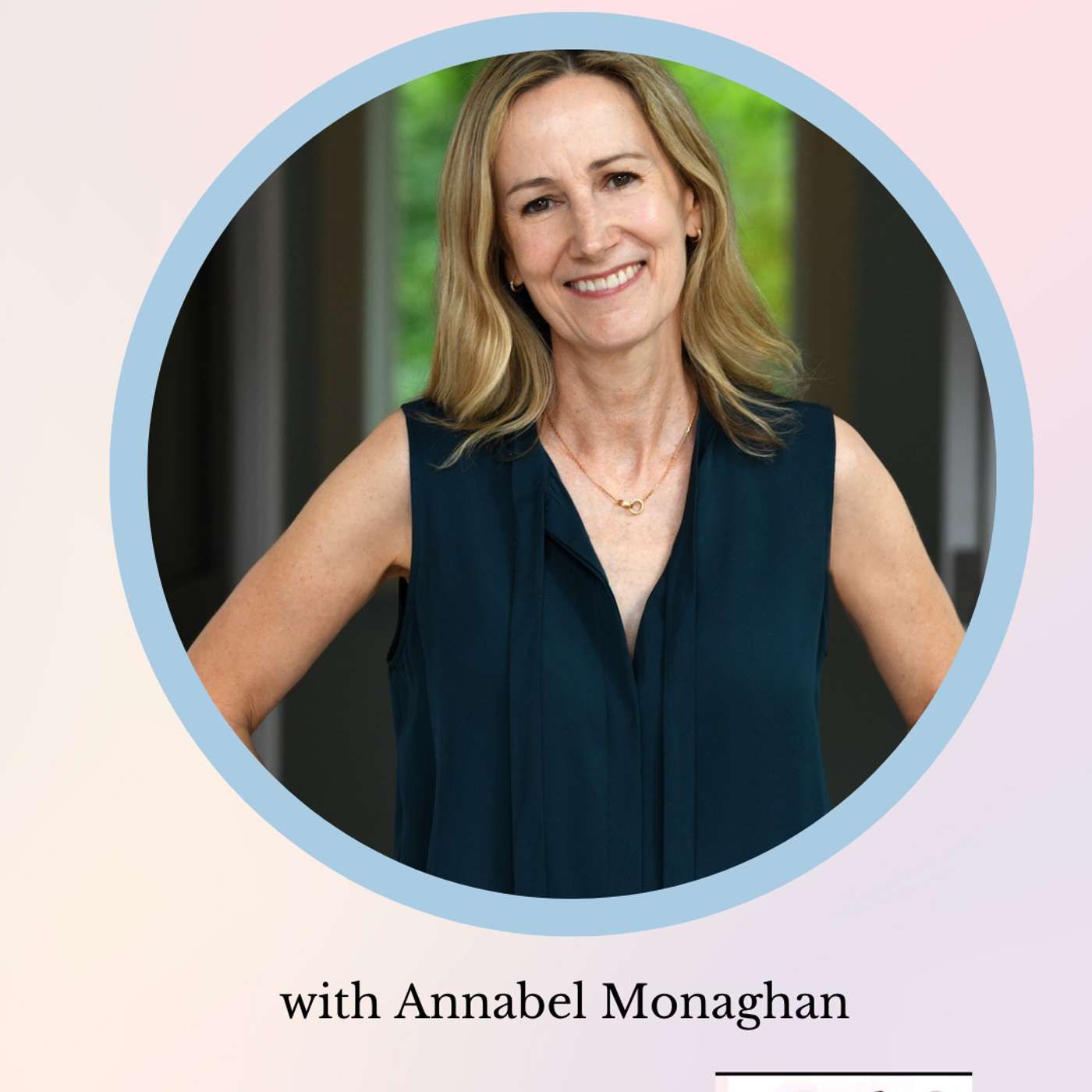
This week on The Running Wine Mom, Samantha sits down with New York Times bestselling author Annabel Monaghan for an honest conversation about motherhood, caregiving, burnout, love, and the invisible mental load women carry every single day. Annabel shares the inspiration behind her newest novel, Dolly All the Time — a story about a single mom juggling work, family, financial stress, and caregiving while slowly learning how to stop carrying everything alone. Samantha and Annabel dive into the “curse of capability,” why moms struggle to ask for help, and how women often become the emotional managers of their entire families. They also talk about:
- Why romance shouldn’t magically fix a woman’s life
- Fake dating, family pressure, and financial stress in fiction
- The emotional reality of caregiving
- Raising capable kids instead of over-functioning for them
- The mental load moms carry every day
- Why women relate so deeply to Dolly’s story
- The famous “pants” mantra from the book
- Writing chemistry and emotional intimacy
- Rhode Island as the perfect summer-book setting
- Website: annabelmonaghan.com
- Instagram: @annabelmonaghan
- Instagram: @therunningwinemom_
- Dolly All the Time
- Nora Goes Off Script
- Summer Romance
0:04 I hope that they first just like, take a moment and go why I really do a lot. Welcome back to the Running Wine Mom podcast. I'm your host, Samantha Slinsky, aka the Running Wine Mom. Today's guest is someone who deeply understands the mental load we all carry. Annabel Monahan is the New York Times best selling author of some of our favorite escapes, Nora Goes Off Script and Summer Romance. But her newest book, Dolly All the Time, with its beautiful cover, felt different to me. It felt personal and just so relatable at this point in my life. It's a story about the understudy, the woman who holds the world together for everyone else while her own needs sit on a shelf gathering dust. It's funny, of course, it's heartbreakingly real, and it's the book we all need right now. So, without further ado, welcome Annabel.
0:57 Wow, thank you that is I love for your description of that book. God, I hope that's true. Yes, it is just and so just a fun like side fact, my mom's name is Dolores, and so my dad calls her Dolly, and I was like, oh. My gosh, this is so fun. I thought of when I thought of Dolly. I thought of Dolly for Dorothy. I don't know why, but I never thought of Dolores. Yeah, that's that. I love that so much. Well, and as we were saying, this is your fourth time on the podcast, so you're officially taking the seat as the person who's come back the most. So thank you for that. Thank you. I have frequent flyer. I love it. I want to punch card so I can get a free sandwich chefter next.
1:38 You just got to keep coming out with books every summer, so no problem. So, as the listeners know, we always start with our wine wine in one of the week, but what we're going to do is a little different this week. I'm going to ask what your wine while writing this book was? To start off, I don't drink wine. Wow, I write, But after I write, I like a nice glass of red something, usually a pino. What is your complaint wine while writing this book? You know, I just I sometimes wine that there just isn't It's it's so hard to keep an entire story in your head. And I just wish that I could have like thirty days to sit and do nothing but write a book, because then it's like you have all the people in your head, and every time you sit down to write, they're doing the things that you ask them to rather than you're like, wait what, and then you have to go back and read the whole thing.
2:39 I mean, I can't tell you how many times in all of my books, I reread the first hundred pages because I'm trying to get page hundred and one. And so it's the starting and the stopping, which is just part of you know, being a human being, and you know you have to do other things. That was the only wine, because I actually did. I had a really joy full, fun time writing this book. It was really it was fun to be in Whitfield, it was fun to be in Dolly's head, it was fun to mess with Stuart. I loved it. Yeah. And so would that be your win of writing this book or do you have any additional wins for this book? The win of writing this book, I mean, the first win is that it was fun to write, because really, like, you spent a lot of time writing a book, So if it's miserable to write, that's like kind of gruesome.
3:27 But the win really is that it's like people like it. I mean, it's just it's making people feel the way that I felt while I was writing it, and I like the thing whatever being misunderstood is like the worst thing in the world. The opposite of that is when you're trying to you're trying to say something and people understand what it is that you're trying to say. So that's been the win for me. So cool. And can you tell everyone a little bit about what is this book about? We'll get into it, but give you a little, you know, synopsis of it. Sure. So it is a It is a story of Dolly Brick, who is a single mom and a She has a full time job, she has three side hustles. She is everybody's emergency contact in her family and she has to go back to take care of her dad and her brother after a little fire, to the town where she grew up in coastal Rhode Island, and she finds herself in a fake dating situation with Stuart Whitfield, who the town is called Whitfield, Rhode Island, and they're basically they're like the Vanderbilts. The house on the cliff at the end, and they have this Johnt used to be a shipping fortune, now it's a real estate fortune. He is up for CEO to take his family legacy to the you know, to the next generation, and he needs her for a variety of reasons that I swear makes sense to pose his girlfriend. So it's the story, you know, it's a little bit like pretty Woman without Anything, kind of yikki,
5:01 and it's the story about really about two caretakers. They're both like bear the major responsibility for their families. Finally like learning how to lean on somebody. Mm hmm. Yeah. So if this book were a wine, would it be a crispy, briny vino Verde to match Rhode Island or a complex aged cab with a lot of sediment. At the bottom. I think it would be a white wine. I think we would be outside, we'd be at a picnic. I think there would be cheese, and it would be kind of like a sance or seven yon Blanc. I love that. I'm down for one of those right now. I could be there. It's almost five, yes.
5:43 And so this book, I thought it was so interesting how it opens up. It's with a woman who's literally juggling work, caregiving, and a crisis in the span of hours. And I think every mom listening just felt or feels that nose of a time that that's happened. I loved the way that this book opened with a. Woman literally juggling work, caregiving, and crisis in the span of hours. And I just think every mom listening can feel that in our bones. Why did you feel that it. Was the right time to write this book with that message. I don't know. I think that I was just ready for it. I'm I think we all are in a world where a lot of people are taking care of their aging parents, They're taking care of their children, or their teenagers or even their adult children, and still somehow like not getting to that me time kind of place.
6:36 And I honestly think a lot of us are doing it lovingly. And I don't have any I'm not caring for my parents, but like I see my friends, like really willingly just going out of their way to manage all of these things. And they do it not as victims. They do it in love, and it is just like it's so beautiful to see. And it's also I see a lot of people thinking, well, I'll just take a break later. There will be time for me later, And it's very difficult once you get into the habit of being a caretaker, to ask for help or to really to think that someone else could do it and you know, as well as you could, or instead of you. So those are just things I've been thinking about for a really long time. And I wanted to write about another single mom, and when I brought her home, I just sort of saw her as that person in the family, the family that everybody everybody leaned on. Also, when I was I wanted to write a book in Rhode Island, because I've been to Rhode Islands amazing, by the way, and I've been there on book tour a bunch, and I visited Newport when I was before I started writing this book, and I went on all those mansion tours, and I like, basically the stories that they tell you on those tours are the same story. It's like this generation brought about great wealth. These people had this lifestyle and then it all went to hell in this generation and now they all like live in condos in Florida or something. And it's like I just kept thinking about, like, what does that feel like for the person who was that generation who let it slip through their cracks. So
8:06 I kind of started thinking about Stewart as a caretaker before I started thinking about Dolly as a caretaker, And it was fun to write a couple that they both have the same issue. It's not like one of them is going to solve the other one's issue. They have exact same problem. So that's where that came from. And you dedicated this book to the caretakers. And you know, Dolly kind of spent her life being her mother's understudy before she even had left. When you were writing her, did you see her hyper responsibility as a superpower or as a cage she kind of built for herself? Bush? You know, I think this is like they say, both things can be true. I do think it's it's a superpower.
8:46 I have a friend who always talks about the curse of capability. You know, if you're in your family that's able to host Thanksgiving dinner, you're always going to host Thanksgiving dinner. That is the cage that you built or someone builds for you. So I kind of think it's both and I that there's there's some value to being like I could do this that do I have to do this? Do I pick everything fall on me? And the answer is no, it shouldn't. Everything shouldn't fall on one person. But it does, you know, it does. Only there's always that one person who's like the one everybody turns to and is like, I don't know what should we do, which is going to lead me kind of to the next question. Dolly, like so many of us, are just holding everything together, her dad, her brother, son house, and barely pauses to ask, like what she wants. Do you think women recognize themselves in her or do you think they avoid recognizing themselves in her?
9:42 I think that when they read her experience, I think they will. I think a lot of people will say, yeah, yeah, I know, I know that, I know that, you know. And it's there's moments in the book that are really not that flattering to Dolly. Or she's so resentful of her sister who doesn't help that when her sister asks what she can bring for thanksgipping, she says nothing, It's fine, you know, just because she wants to prove herself right, see yeah, anything. If she walked in with a pie, then she wouldn't be able to hate her so much, you know. It's every every act of love is so beautiful. Everything can be so beautiful until you overdo it.
10:23 Yeah, And it's so funny. That's what I was going to say. There's like an undercurrent of in the book. If I don't do it, no one will just like Thanksgiving, like you know, I'm just going to do it. I don't need anyone to help. I'll do it. Yeah, it's I got But where do you think this belief really comes from? And why is mother's Is it so hard to just let that go? Like is it our ego? Like you're you know, we were kind of saying like I'll just do it, or where do you why do you think we're like this? I don't know. I mean I think you start out doing everything and then you have you end up with a way you like things done, and so then it's hard to ask for help because if somebody else take over, it's not going to be done the way that you'd like to. I also think that a lot of women don't know how much they do, how much they take in a family. You know, there are tasks like if you could list all the tasks that you do all day, it's it would still only be like seventy percent of actually what you do because you're thinking, what's the next thing?
11:20 What are we there's so much mental load that you carry, and it's hard to ask somebody else to take your mental load. Yeah. I think Dolly experiences that, like with her dad and with her brother, you know what's going to happen to them. She's the only relief engaged with that. Yeah, And there was in there. It was the one the pants mantra throughout the book, Dolly shorthand for caring for Christopher is the one word command pants. We all have a bare minimum thing that we track for our families. What is the pants moment in your own life? Hmmm, that's a great question because you know, I don't have kids at home anymore. Yeah, so I'm now in this place where my life about my work and hanging out with my with my husband. It might have been helmets.
12:07 H Like, as long as everybody was wearing a helmet, I felt like that was going to be okay. They were all riding around and food. When I had kids, like food was a really big thing that was like that was my love language. Like if everybody had had a pound of bacon every day, I was like, everybody's going to be okay. I made a lot of bacon. Crazy, you know, I know I'm trying to think of like what mine is right now. I don't even know. There's just so many of them. My kids are, you know, they're still so young, so I feel like there's there is just. Far too many to pick one. But I would probably say food might be one of them. Well, and it changes over time. You know, there's a name when it's just like you don't want anybody to like have a head injury, and then Peter, you're like worried about porn on the internet. Yeah, it's just like it just like changes and morphs into like more things that could happen.
13:02 Yeah, no, it's so true. Yeah, so this book, it's not your typical romance. It's layered with real life, with money, stress, caregiving, burnout. Why was it important you know that the love didn't magically fix everything like it does in so. Many because I think it's that's my favorite thing. Yeah, it really is. It's my favorite thing when you get when you're reading a love story and you're really invested in these people and you really want it to work out, and there's a moment where it doesn't work out, but you still think she's going to be okay. It's literally my very favorite thing, because in real life, nobody meets a guy and then has all of their problems solved. Like that is not a thing that ever happens, and it's not a story that we should be selling to young women, like, oh, just wait, someday you'll meet a guy and then say, your princes will come, credit cards will be paid off, and you'll be happy and you'll feel good about your body.
14:01 I mean, that's not a thing. So I love that. I also so I love I love when. I love when the love story is a little bit like a love story between the woman and herself and she's changing and then we get the happy ending. Yeah, yeah, and I do I think of that. I still think of Nora goes off script a lot, and I feel like Nora was that way as well. I just like love that about the you know, the characters. I feel like it's so important so to go to the man. When Stuart enters the picture, it's almost like kind of two completely different worlds collide. What did you want readers to feel in that contrast? Did you want them to feel fantasy or reality or how did you kind of want them to.
14:44 Feel when you know? I love the question. I love the way you phrased that, because I hadn't really thought of that before. I did want them to feel fantasy and reality at the same time. And when I was in Newport and I was researching this trip, you know, I'd come back from all the mansions, and then I was in town in Newport or just the most gorgeous town you can imagine, and down every street there were like houses where people lived with clotheslines and music coming from them, and it was just so it was just like there was so much life and beautiful things happening there, and I thought it'd be fun to get these people together. And as exhausted as those people in those mansions must have been like trying to make things work, they weren't as exhausted as the other people in the warehouse trying to make things work. I just thought, that's always so fun when you can bring that stuff together.
15:33 Yeah, that really is. And it's so it is so interesting when you go to these big, beautiful places and it's like you see the the like that I'm thinking as you're saying that in Newport, I'm reminiscing about our chip where it's like, yeah, there's just like normal people that are also living here too. It's not just you know, in the in the Mega Mansions. So one of the scenes in the limo where they practice the oxytocin inducing hand holding, it's pretty, you know, so electric. And I just wanted to know how you approached writing intimacy that feels like disarming rather. Than just steam romance, see me intimacy. So you've read my books because I've been here so many times? Yes, not, I know.
16:13 When I wrote it, I was like, I know how you feel about this, but I gotta ask. Yeah, and I love a steamy book. Yeah, I'm just not. Like, it's just not the way I write. And I like, I could try, Like if you gave me a million dollars and you were like, write something steamy, it would be silly. I would get silly while I was writing it. I do feel like, like the initial touching moments, I really love writing those moments, and I do. Which is a really fun thing about fake dating, because there's always an excuse for two people who aren't admitting that they're attracted to each other to you know, to have some kind of a touch. But I will say that I'm writing another book right now, and my editor has given me very few comments. But what she did say, which I think is hysterical, she said, you know you're getting better sex.
17:01 Yeah. I was like, you know, this is feedback I've never gotten in my entire life, so from anybody. Yeah, because I think it was our first interview that we talked about and you just said you I remember you say you just did not It was just not what you want, what you like to write about, and so this is great. Yeah. I know I'm loosening up a little bit, yeah something, but I do. And I love writing. I love writing the moment before the kiss, you know. I think that is like sometimes the that's the electric thing, Like the kiss is the kiss, but the urin I'd love I'd love that me too. I think it's sometimes more important than the like you know where it leads to the whole lead up, which is pretty fun. So to go on the opposite of steamy, we're going to talk about the financial stress in this book.
17:49 It is so real. Why was it important for you to show this side of life so honestly? Well? Love for so. I love writing about money. M h. I love talking about money. I just like I think it's such a it's such an interesting part of our life and the decisions that we make around money, and the guilt and the shame that we have around having it or not having it, or if you get it, you can't spend it. You know, all of that. I love the topic. I also really love in a romance where there are like a lot of not even in a romance, in any story, a story strengthens with how many conflicts and problems there are. A woman who has a child, a single woman who has a child, has a lot of conflicts and problems and a lot of responsibilities if she's broke, like the steaks just naturally raise. Yeah, it's just like there's so much more to it than Oh, he's handsome, I hope he kisses me. She has so much more at stake with her family kind of struggling behind her. And then on the other hand, like Stuart's a kajillionaire, so it was very fun to bring her to his house for dinner and to have her accidentally walk in through the service entrance and just for her to experience all of that, you know it that casual way that very wealthy people are with their money.
19:09 Yeah, And there's a powerful line in the book love is fickle, debt sticks around. How much of Dolly's identity do you think is tied to the financial and emotional debts of her parents? A lot? A lot so her father. I mean, this is very early in the story her The backstory was that her father tried to open a second he owns the local fish shop. He was going to open a second fish shop to impress his wife, who was not impressed with his financial success. And that was a failure, and her mother left because he was never going to amount to anything. And so I think that basically her origin story is about being broke, trying to find a way not to be broke, and trying to like always be able to be totally independent and take care of herself and make up for her mother's absence. You know, she had a lot to do.
20:00 Yeah, And so you know, the setting in Rhode Island, it feels almost like it's a whole other character in the book. The coastal town, the fish house, the routines. What does home mean in this book? And is it a place where is it a responsibility? I think that her home, because it had been in her family for a while, much like his, her home was the place where her brother, who's disabled, feels the most comfortable, like that home is what connects him to the memory of his mother, who he hasn't seen since you left. And so it's I don't think that Dolly would admit to herself that she has such an emotional attachment to her home, but he does, and she wants that for him. Yeah, home can be very, very emotional.
20:45 And then the other thing you described the zen of a fish house, the you know, the fans and the salt sweet smell. But if you had to spend a summer working at the fish house, would you be behind the counter or would you be in the back getting the cut? Samantha, that's a great question. My uncle was a fishmonger, okay, and he had a fish store in Los Angeles. I mean I remember, and my grandfather, his father was a butcher and the fish store and the butcher shop were right like across the hall from each other, and I remember going to visit them and being like Granddaddy a big hug and he's got blood all over his white aprons.
21:26 And my uncle, hey, uncle Bobby, and he's got like fish guts all over him. So it's kind of doesn't freak me out. So maybe I'd like to be behind the counter with the fresh air that does nicer. Yeah, what was your favorite part of the book to write? Well, there's a scene where Dolly kind of tells Stuart off, and that was so satisfying to write. Just felt like like I had when I'm writing a book, I like get very like deep into the skin of the I'm writing through. I was so pissed by this point, like honestly, like I would walk around like walking my dog, like muttering under my breath. I was so pissed, and I I just let him have it. Dolly let him have it, and it felt really satisfying. Also, any scene that her friend Naomi was in was really fun to write because her friend Naomi is the kind of person who will just say anything, and that felt very freeing. It's not like, oh, what should this person say? Like she's a wild card, and you just see that kind of friend, right, we do, especially you know if you're like the person who's always trying to do the right thing.
22:35 Right exactly all right. So I am so excited for everyone to read the book, and for the moms who are listening that feel like they're carrying everything. What do you hope that they take from Dolly's story. I hope that they first to just like take a moment and go, wow, I really do a lot. Yeah, Like I really am. You know, whether they're at home, or whether they're at work, or whether they're whatever it is you are. You are constantly managing your family from your conscious mind, your subconscious mind. Like just to sit with it and be like, wow, that's not a joke. What it is that I have taken on? I mean, motherhood is a lot to take on. And then you know, to the extent it's appropriate. I'm not here to boss anybody around. So many things we can do can be done by our partner, can be done by our children.
23:32 I mean it's believable how little and I'm just going to speak for my generation, how little we ask if our children. Yeah, it's very much in reaction to the way our parents like kind of treated us like soldiers. But like your kids can like cook, Yeah they can, we should ask them to. Yeah, I agree. I try to get my kids responsible because it's so much on us. I'm like, I can't do all of this. I need you guys to do. You know, even it's if it's small things that they can It is surprising how much of like a burden it can take off by having them just do smaller things no matter. I mean. Also, also it makes him feel good.
24:14 It does, it really does. I know. My daughter gets so proud every time she does something. The other day, this is a funny story before we wrap it up. They were sleeping at my parents last weekend for anniversary. I was taking my son to the gym. My husband was home, but my daughter didn't want to go. So I was like, listen, I would like you to pack your stuff for mimium papses. And I drew all of the things like you know, shirt times one pants, I drew times you know this, And so I said, you could go give this to Daddy and you can do it, and who'll make sure you do it properly? And I came home He's like, she did it all, like she knew exactly what she wanted. She felt such pride in packing everything. She told everyone she packed everything.
24:57 And I just thought, wow. I was like nervous that she was not going to be able to do it, and she did it with grace. You know, you know, I bet I think you should ask your parents. I bet the minute she got there she was like, you want to see what I packed in my suitcase? No? Right, like she must have felt and you know, not to bring it back to my book, but there's a thing in like a very small thread in that book about how she feels badly that she never asks her anything of her disabled brother. You know, they just make him comfortable. Yeah, and then towards the end of the story, like he takes on some more because she lets him or he has to, and he feels better right, not helping her out that much, but he's like, oh, look at me, engaged in the world.
25:44 Yeah. Anyways, Yeah, I think I think our kids can do stuff, all right. Well, I think that is a great place to end it. You know, I think every woman listening is going to go out and they're going to buy Dolly all the time and then probably go and take a nap while someone else handles the pants for once. So everybody, everybody keep your pants on. Read the book. Yes, as always, thank you so much for spending time with us today on The Running Wine Mom. Don't forget to subscribe, leave a review, and share this episode with someone who needs to hear it. You can follow me on Instagram at the Running Wine Mom Underscore and Annabel tell the listeners where they can find you, where they can find your book and all that good stuff.
26:27 So you can find me. My website is Annabelmanahan dot com. I'm on Instagram all the time at Annabel Monahan, also Facebook Annabel Monaghan, and I'm going to be going on tour all over the country, so all of those events are on my website Annabelmanaghan dot com and my book everywhere books are sold. Is that what we say? Yeah? On May twenty six, right twenty six, okay, perfect, Hanna will yes, I will link all of that. Thank you Annabel for coming on again. I will definitely see you next year for this next book. I can't thank you for having me back. I'm so proud to be your frequent flyer. Thank you. I love having you. So Thank you everyone for joining us today. Remember you were strong, you were capable, and you were all amazing.
27:11 Until next time, keep running, keep sipping, keep reading, and keep embracing the joy of motherhood. Cheers and I'll be back next Tuesday.